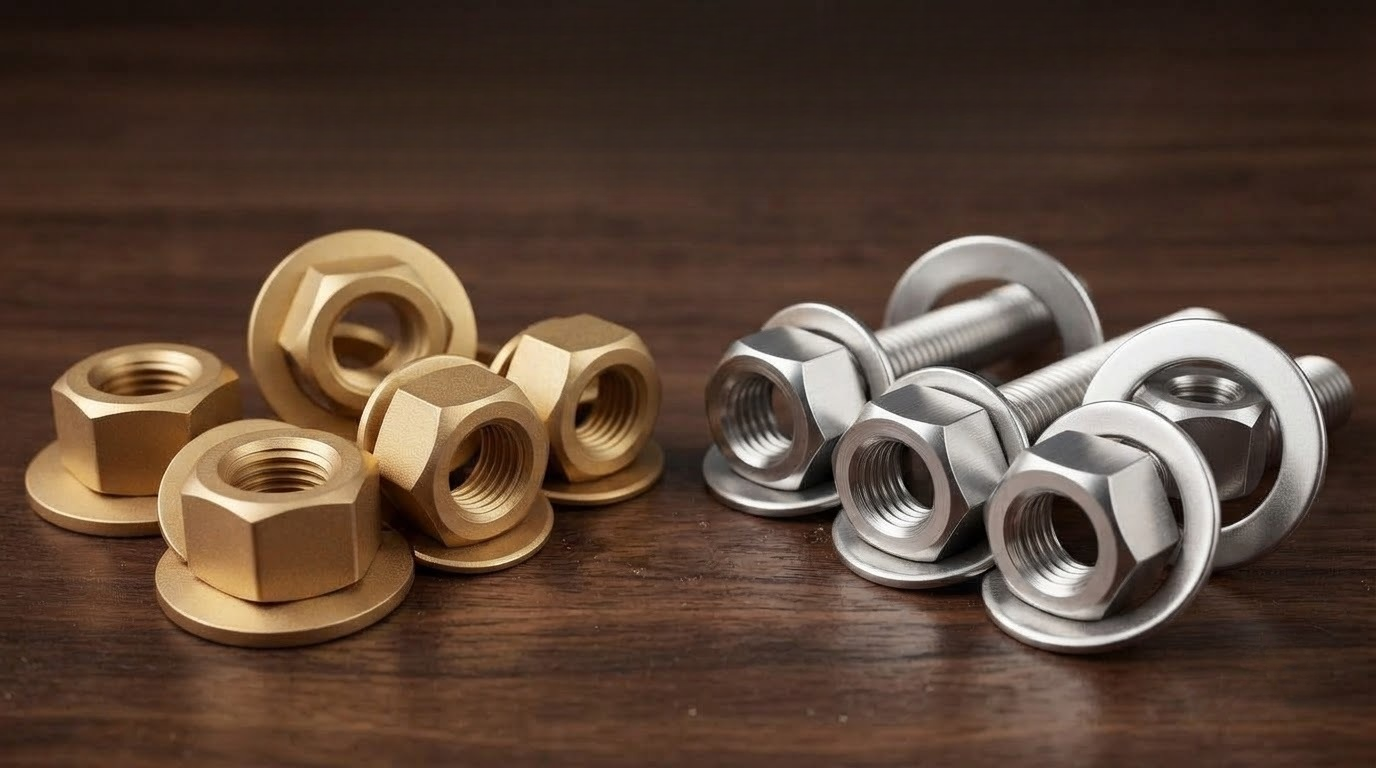
Comparing Hastelloy C276 hex nuts and stainless steel 316 nuts reveals distinct differences in corrosion resistance and service severity. The choice between them ultimately comes down to practical factors such as the corrosion environment, required strength, operating temperature, applicable specification, and overall cost. For applications requiring Hastelloy C276 hex nuts, selecting a supplier that can provide the specified grade, dimensions, and required documentation is equally important.
Hastelloy C276 vs Stainless Steel 316: Basic Difference
Hastelloy C276 is UNS N10276, a nickel-chromium-molybdenum alloy engineered specifically for aggressive chemical service. SS 316 is UNS S31600, a widely used austenitic stainless steel valued for solid general-purpose corrosion resistance. These differences in alloy chemistry help explain their different performance characteristics. C276 contains substantially higher levels of molybdenum and other alloying elements that contribute to its resistance in aggressive chemical environments, while 316 provides suitable corrosion resistance for many less severe industrial applications at a lower material cost.
| Property | Hastelloy C276 | Stainless Steel 316 |
|---|---|---|
| Material Type | Nickel-chromium-molybdenum alloy | Austenitic stainless steel |
| UNS Designation | UNS N10276 | UNS S31600 |
| Primary Alloying Elements | Nickel, chromium, molybdenum, with tungsten and other alloying elements | Iron, chromium, nickel, molybdenum |
| Corrosion Resistance | Excellent resistance to a wide range of severe corrosive environments, including reducing and oxidizing media | Good general corrosion resistance, with improved resistance to chlorides compared with many standard stainless steels |
| Pitting & Crevice Corrosion | High resistance, particularly in aggressive chemical environments | Better resistance than many common stainless steels, but less resistant than C276 in severe chloride and chemical environments |
| Typical Service Severity | Severe chemical processing and highly corrosive environments | General industrial, marine, food-processing, chemical and engineering applications |
| Relative Material Cost | Higher | Lower |
Corrosion Resistance Comparison
SS 316 provides good corrosion resistance across many general industrial and chloride-containing environments, which is why it remains a default choice for a huge range of fastener applications. Hastelloy C276, on the other hand, is better suited to highly aggressive chemical environments, offering stronger resistance to pitting, crevice corrosion, and degradation in severe chemical service where 316 would eventually fail. C276 is not automatically the better choice for every application; in less aggressive environments, its additional corrosion resistance may not justify the higher material cost.
Strength and Service Conditions
Mechanical loading, temperature, and exposure conditions all factor into which nut actually holds up in service. C276 can tolerate more severe combinations of temperature and chemical assault than 316, and hence is the more dependable choice when a fastener is exposed to both mechanical stress and intense chemical attack. However, with the light stress and temperature ranges that meet the bulk of the everyday industrial fastening requirements, SS 316 performs well enough that a premium alloy is not needed.
When Should You Choose C276 or SS 316 Nuts?
- Choose Hastelloy C276 when severe chemical corrosion resistance is the primary requirement.
- Choose SS 316 when good corrosion resistance and cost-effective performance are sufficient for the service environment.
- Weigh temperature, chemical concentration, chloride exposure, mechanical loading, and the applicable fastener specification before finalizing the selection.
Cost and Procurement Considerations
C276 nuts generally command a noticeably higher material cost than SS 316 nuts, simply because they’re a nickel-based, high-performance alloy built for a narrower, more demanding range of applications. That cost difference means C276 should be selected based on actual service requirements rather than treated as a direct upgrade or substitute for 316 across the board. Specifying C276 where 316 would perform perfectly well just adds unnecessary cost without a corresponding benefit.
What Should Buyers Check Before Ordering?
A few details matter regardless of which alloy gets specified. Confirm the grade and UNS designation against the drawing, along with nut type, dimensions, and thread specification. Verify the applicable ASTM/ASME/DIN standard the order needs to meet, and confirm quantity requirements upfront to avoid mid-order changes.
Material test certificates and inspection or testing needs should be agreed prior to the order being placed, not after delivery. Traceability is important as well purchasers need to be able to track the exact heat and batch their fasteners originated from, especially for critical applications. If you choose a reputable Hastelloy C276 Hex Nut supplier, the verification procedure is much easier, since normally documentation and traceability are standard and not an extra requirement.
Stainless Steel 316 Fasteners remain a practical and cost-effective solution without sacrificing reliability for those applications where 316 truly addresses the corrosion risk.
The choice between C276 and SS 316 nuts should be based on the severity of the actual service environment and the performance genuinely required. C276 is built for more aggressive corrosion conditions, while SS 316 is often the practical choice where its corrosion resistance is adequate and cost matters as much as performance.