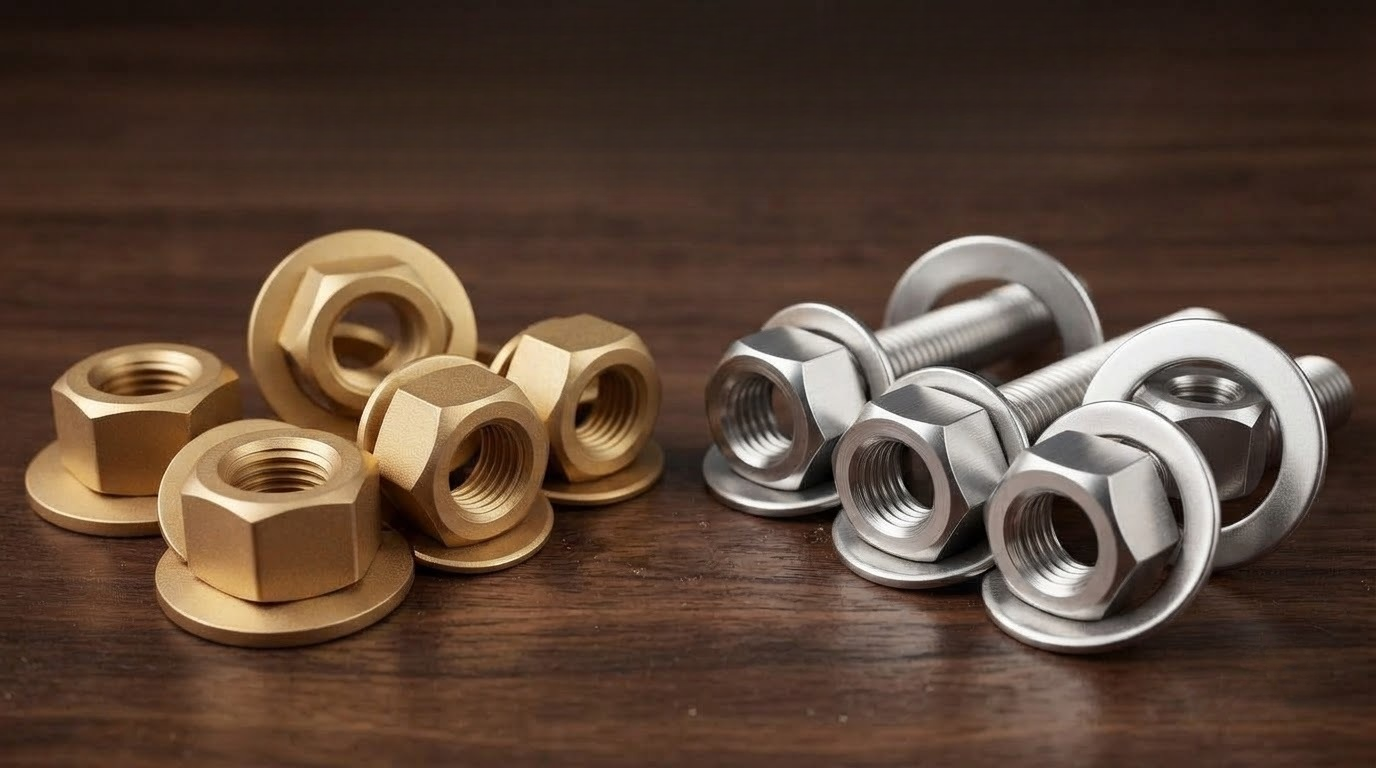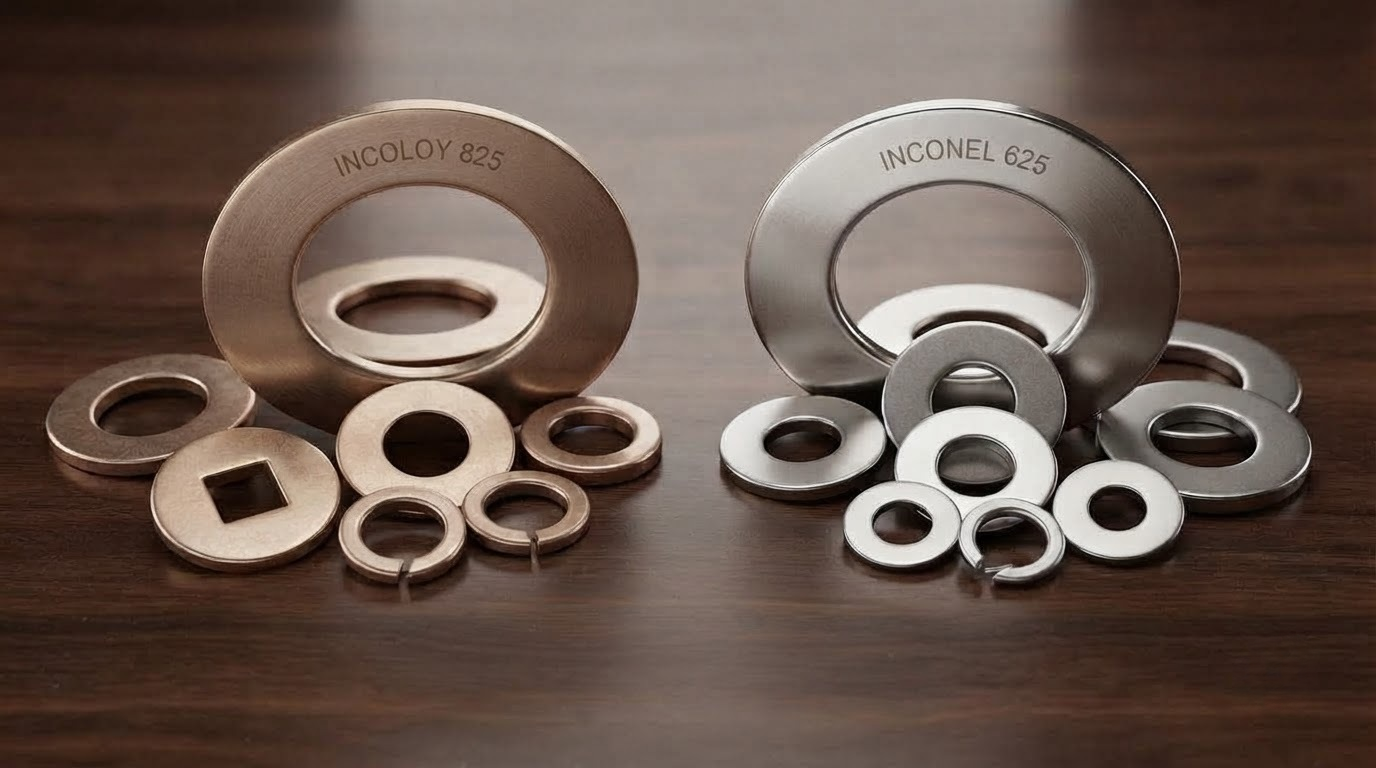
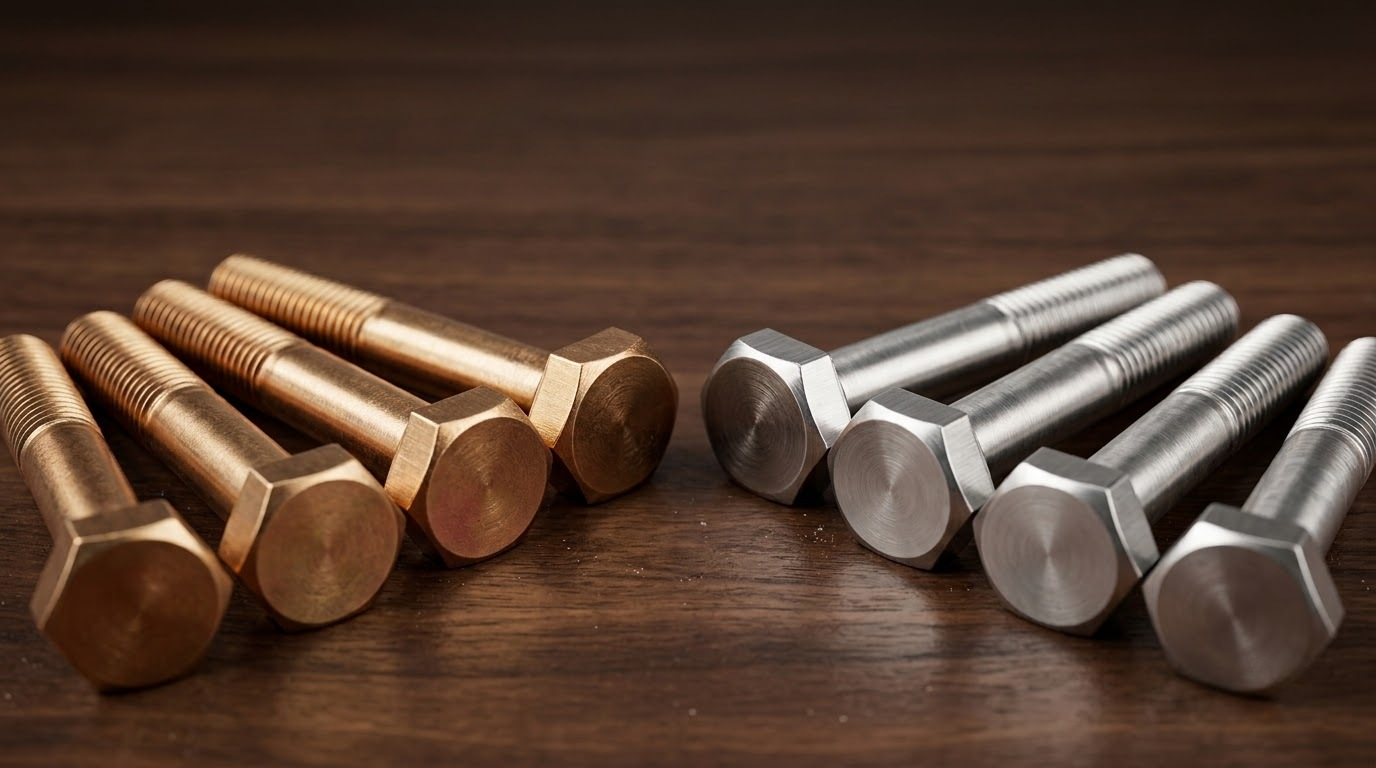
Hex bolts made from silicon bronze and stainless steel can look almost identical on a shelf, but they behave very differently once installed. Silicon bronze bolts, most often specified as C65500 hex bolts, draw from a copper alloy base and hold up well in marine and freshwater settings. Stainless steel hex bolts get their resistance from a chromium oxide layer, and how well that layer performs shifts depending on the grade chosen. Picking between the two comes down to the environment the fastener sits in, the load it carries, and how the joint gets assembled.
Material Composition and Characteristics
Silicon bronze and stainless steel belong to two separate metallurgical families. C65500 combines copper with silicon and a trace of manganese, giving the bolt its bronze-gold tone and corrosion resistance built into the alloy, not applied as a coating. Stainless steel gets grouped by series, with 304 and 316 being common fastener choices, and resistance comes from chromium and nickel reacting with oxygen. Buyers sourcing through a silicon bronze hex bolt supplier such as Metal Yard India’s silicon bronze hex bolt range should find composition details listed against each batch, since alloy makeup affects how the bolt handles moisture and load.
Corrosion Resistance
Silicon bronze resists saltwater and brackish water reasonably well without added coatings, which is why boat builders and dock fabricators specify it often. Stainless steel corrosion resistance depends heavily on grade. 316 stainless holds up in coastal air and light marine exposure, while 304 can pit in chloride-heavy environments over time. Neither material is immune to every corrosive condition, and the correct choice depends on how much salt, moisture, or chemical exposure the joint will see.
Strength and Mechanical Performance
Mechanical performance isn’t a simple contest between the two metals. Silicon bronze bolts sit in a lower tensile strength range than most stainless grades, but that doesn’t rule them out for structural work where the joint design accounts for it. Stainless steel fasteners made of A2 and A4 grades are more suitable for load-bearing applications, as they have higher tensile ratings. The right spec will depend on the engineering standard to be applied and the loading condition, not on the assumption that one metal is better than the other in all possible cases.
Electrical and Thermal Conductivity
Copper content gives silicon bronze a conductivity advantage that stainless steel doesn’t have. This matters in applications where galvanic behavior or grounding paths need consideration, such as marine electrical fittings or equipment near dissimilar metals. Stainless steel conducts heat and electricity at a much lower rate, which can be an advantage in settings where thermal or electrical isolation between components is preferred rather than avoided.
Appearance and Surface Characteristics
Silicon bronze carries a warm, gold-brown finish that develops a patina over years of outdoor exposure, similar to other copper alloys. Stainless steel keeps a bright, silver-grey surface with minimal color change over its service life. Restoration projects, historic boat fittings, and architectural work where visual matching to existing bronze hardware matters tend to favour silicon bronze. Stainless steel is chosen where a consistent, modern finish is the priority.
Marine and Industrial Applications
Silicon bronze hex bolts see regular use in boat hulls, dock hardware, and below-waterline fittings where galvanic compatibility with bronze fittings already installed is a factor. Stainless steel hex bolts cover a wide range of uses, from structural steel connections and outdoor construction to machinery assembly and general industrial equipment. Neither material suits every marine or industrial scenario on its own, and the surrounding metals in a given assembly often decide which fastener avoids galvanic corrosion issues down the line.
Cost and Maintenance Considerations
Silicon bronze carries a higher raw material cost than standard stainless grades, though it can cut long-term maintenance in marine settings by preventing galvanic reaction with existing bronze hardware. Stainless steel fasteners, especially 304, sometimes need replacement sooner in aggressive coastal air, adding to lifecycle cost even where the upfront price is lower. Maintenance planning should weigh replacement frequency and joint accessibility, not the purchase price on its own.
How to Choose Between Silicon Bronze and Stainless Steel Hex Bolts
Selection comes down to a handful of practical questions. What is the corrosion exposure: saltwater, freshwater, or dry industrial air? What tensile rating does the joint require? Does the assembly include other bronze or copper fittings that need galvanic compatibility? Is a specific finish color match required? Once those answers are clear, the applicable specification, whether ASTM B98 for silicon bronze or the relevant stainless steel standard, narrows the decision further. Buyers evaluating bronze fasteners for marine or restoration work can review current stock and specifications on MetalYard India’s Silicon Bronze Hex Bolts page before finalizing an order. MetalYard India supplies both fastener types to fabricators and industrial buyers working across these varied requirements.