Flanges connect pipes, valves, pumps, and other equipment across oil and gas facilities, forming the joints that keep entire piping systems leak-free under pressure. Choosing the right flange type directly affects leak prevention, pressure handling capacity, and how easily a system can be maintained down the line. This article covers the flange types that show up most often in oil and gas operations and where each one fits.
What Are Flanges?
Flanges are mechanical connectors that create secure, leak-proof joints at the points where piping sections, valves, and equipment meet. They come in a range of designs, pressure classes, and material grades, each suited to different combinations of pressure, temperature, and process media. Manufacturing follows standards such as ASME and ASTM, which govern dimensions and pressure ratings for industrial piping applications.
Common Types of Flanges Used in the Oil and Gas Industry
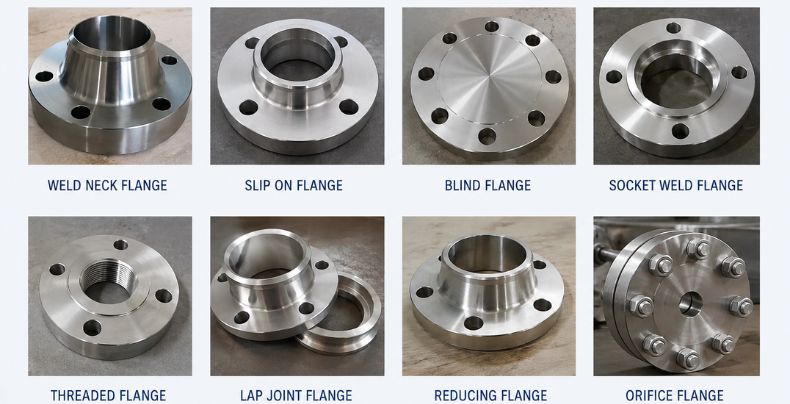
Weld Neck Flanges
The tapered hub ensures consistent distribution of mechanical stress along the entire flange-to-pipe transition and lowers the stress concentration at the weld. Weld neck flanges are most frequent in high-pressure, high-temperature pipes where you need to be certain of reliability under stress.
Slip-On Flanges
Slip-on flanges are easier to install since they are slipped over the pipe and then welded in place. Normally utilized in low to medium-pressure piping systems where installation time is more critical than maximum pressure rating.
Blind Flanges
Blind flanges are used to close off the end of a pipeline or pressure vessel that doesn’t have a bore in the middle. The rough nature of this structure allows facilities to plan for future pipeline development and makes maintenance at the sealed point simple.
Socket Weld Flanges
Socket weld flanges suit small-diameter piping running at high pressure, where the pipe inserts into a socket before welding. This connection method delivers a strong, leak-resistant joint in a compact footprint compared to butt-weld alternatives.
Threaded Flanges
Threaded flanges connect to piping without any welding involved, using machined threads instead. Facilities specify this type where welding isn’t practical on site, or for lower-pressure service where a threaded connection meets the load requirements.
Lap Joint Flanges
Lap joint flanges pair with a stub end, which allows easier alignment during installation and rotation after the fact. Systems requiring frequent dismantling and inspection favor this type since the flange itself doesn’t need to match pipe orientation precisely.
Materials Commonly Used for Oil and Gas Flanges
Material selection depends on the pressure class, operating temperature, corrosion resistance needs, and the specific process media running through the line.
- Carbon Steel
- Stainless Steel
- Alloy Steel
- Duplex Stainless Steel
- Super Duplex Stainless Steel
- Inconel
- Monel
- Hastelloy
- Nickel Alloys
- Chrome Moly Steel
Applications of Flanges in the Oil and Gas Industry
Flanges appear throughout nearly every stage of oil and gas infrastructure, connecting equipment across:
- Refineries use heavy-duty flanges to connect distillation columns, cracking units, and other high-temperature process equipment where leak-free performance is critical.
- Offshore platforms link high pressure subsea risers and topside processing lines and withstand harsh oceanic conditions
- Onshore pipelines connect long-distance cross-country transit segments for ease of field maintenance and routine inspection
- Corrosion resistant alloy flanges for petrochemical plants, optimum safety sealing volatile hydrocarbon transport networks.
- In the processing of liquid natural gas under conditions of high cryogenic temperature, LNG plants have very good structural sealing.
- The filtration units and dehydration towers in gas processing plants are interconnected to ensure safe continuous separation of the gas stream.
- Quick removal for normal mechanical service. Pump and compressor systems isolate heavy machinery vibration.
- Thick-walled access hatches and nozzle connections are attached tightly to pressure containers to endure high internal pressure cycling
Factors to Consider When Selecting Flanges
Selecting the correct flange type and material grade directly improves system safety and long-term operational performance.
- Flange type
- Pressure class
- Pipe size
- Material grade
- Operating temperature
- Process media
- Corrosion resistance
- End connection
- Applicable ASME/ASTM standards
- Maintenance requirements
Conclusion
Different flange types exist to meet the specific pressure, temperature, and installation demands found across oil and gas operations. Choosing the correct flange type and material grade improves safety, prevents leaks, and keeps equipment reliable over years of service. Match flange selection to industry standards and the actual operating conditions of your piping system before specification, not after installation issues surface.