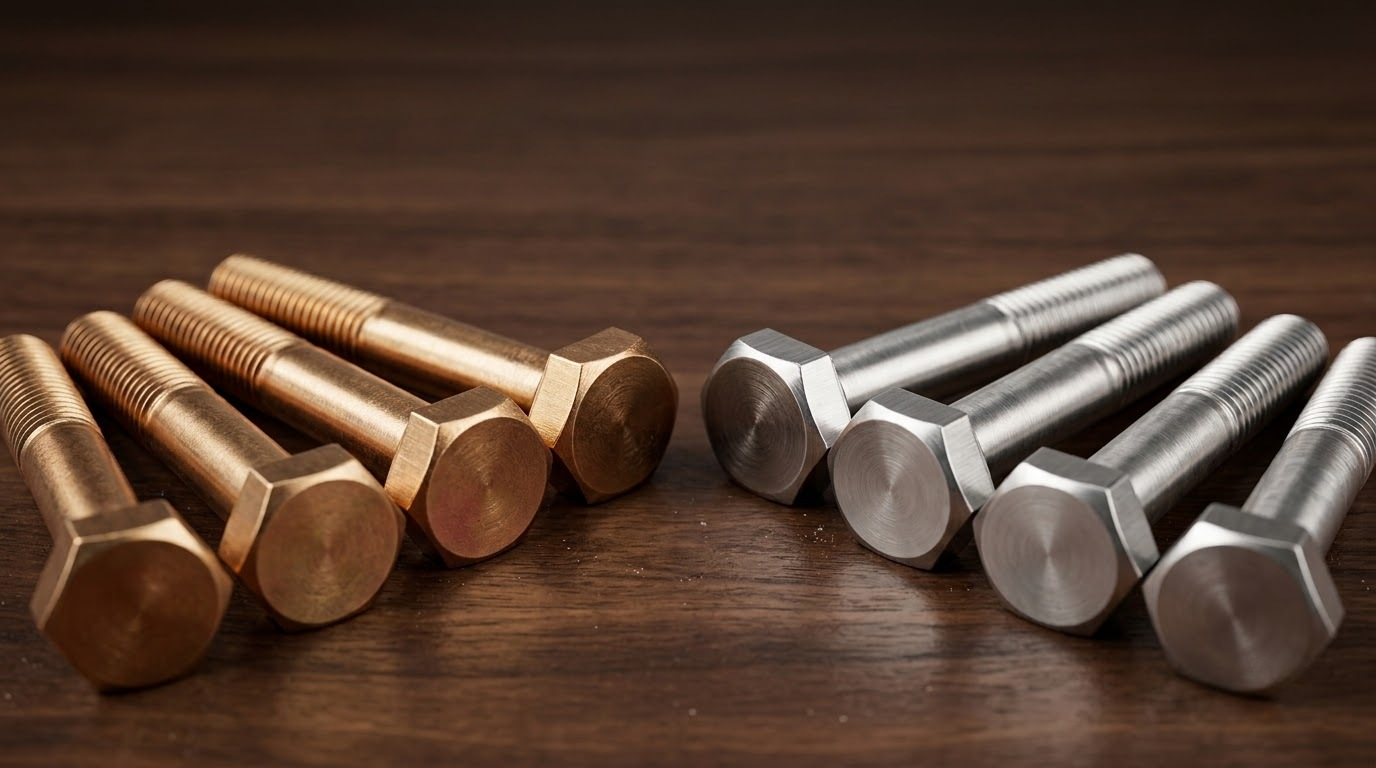
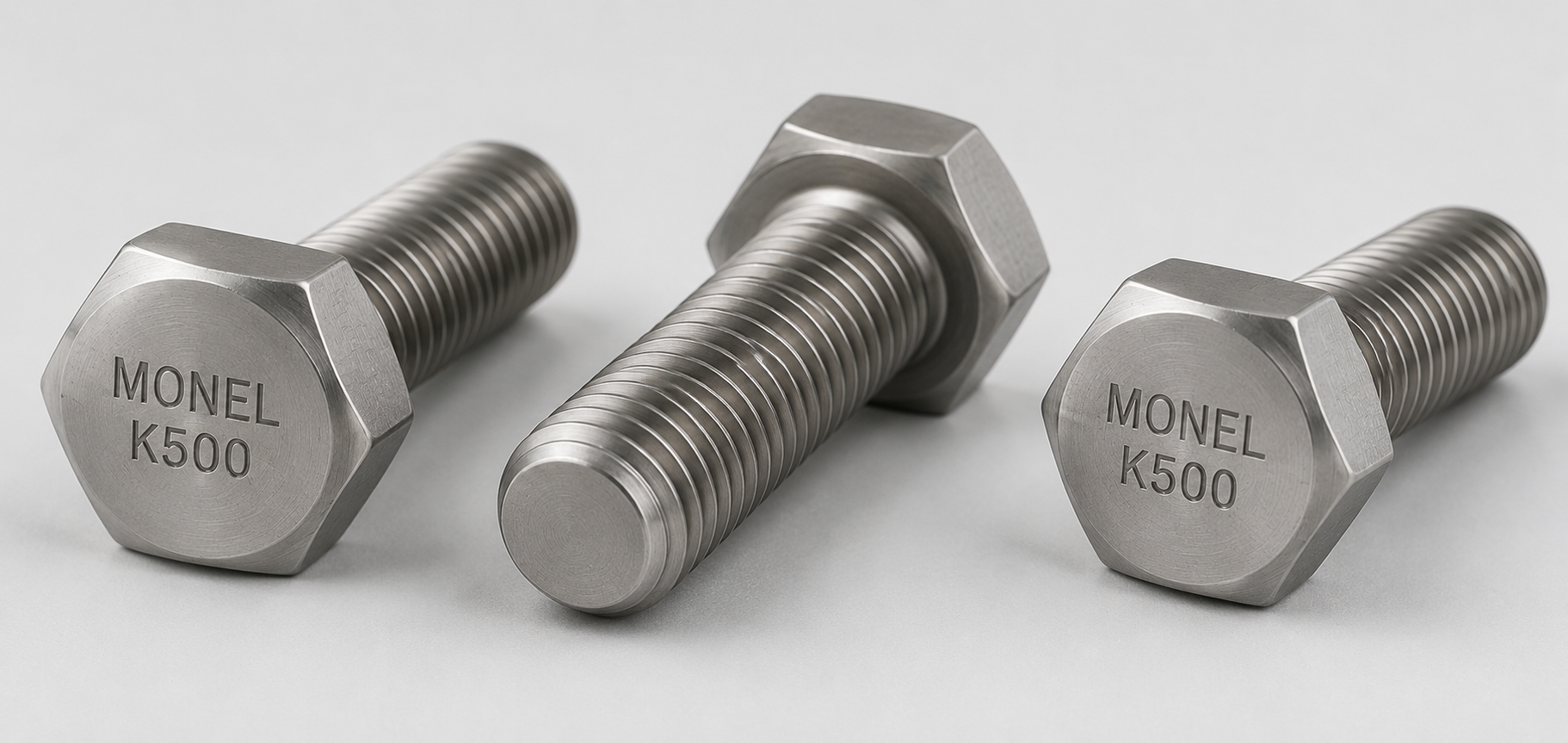
Monel K500 Hex Bolts are precision fasteners made from a nickel-copper alloy engineered for exceptional resistance to corrosion and mechanical stress. Marine, offshore, chemical processing, and oil & gas operations depend on these fasteners in conditions where failure carries real consequences. How long they perform at full capacity comes down to how well they’re maintained. What follows are practical, field-relevant maintenance tips grounded in how these fasteners actually behave in service.
Understanding Monel K500 Hex Bolts
Monel K500 is a precipitation-hardened nickel-copper alloy, typically comprising around 63% nickel and 28% copper, with aluminium and titanium added to push tensile strength well beyond standard Monel 400 Hex Bolts. That composition doesn’t sacrifice ductility or toughness. The alloy holds its mechanical properties across a broad temperature range, which matters in environments where thermal cycling is a daily reality.
The resistance profile is what drives adoption. Aggressive acids, alkalis, and saline environments that degrade standard stainless fasteners do little to Monel K500 under sustained exposure. Offshore drilling rigs, subsea equipment, chemical reactors, and naval vessels use these bolts precisely because the alternatives fall short.
Why Maintenance Matters
Even the most corrosion-resistant alloy has boundaries. Prolonged contact with chloride-rich seawater, hydrogen sulphide, or industrial chemicals will gradually compromise surface integrity when bolts go uninspected. Add vibration, thermal cycling, and sustained mechanical loading into the picture, and that process accelerates.
Neglecting early warning signs leads to bolt fatigue, joint loosening, or sudden failure. Each of those outcomes carries operational and safety consequences that dwarf the cost of a routine inspection. Prevention, at this scale, is consistently more economical than reactive repair.
Proper Installation Practices
Torque accuracy is essential. Both over-tightening and under-tightening cause stress concentrations that are compounded with each load cycle. Use a calibrated torque wrench and set the manufacturer’s specified value.
Equally important is the metallurgical compatibility of Monel K500 Fasteners and mating parts. Galvanic corrosion occurs due to the dissimilar materials at the interface joint. Thread condition before assembly needs equal attention. Contaminated or damaged threads reduce the clamping force and create crevice corrosion. Check the threads, confirm alignment, and never force a bolt into position.
Regular Inspection Techniques
Inspect the bolt shank, head and threads. Check for pits, discolouration, surface deposits or any physical deformation. Micro-cracking or thread deformation is visible only after inconsistent clamping behaviour and unusual joint play are visible.
Visual checks are not sufficient in offshore or chemical processing environments. Supplement with dye-penetrant or ultrasonic testing at periodic intervals. Any indication of fatigue, loosening or abnormal vibration should be investigated immediately, not delayed until the next planned cycle.
Cleaning Methods
Salt deposits, hydrocarbon residues, and industrial grime accelerate localised corrosion when left on bolt surfaces. Warm water with a pH-neutral detergent, applied using soft nylon brushes, handles routine cleaning without risking thread recesses. That’s the approach to stick with.
Chloride-containing agents and abrasive pads must be avoided entirely. Both strip the alloy’s natural passivation layer and set up conditions for accelerated surface attack. Once cleaned, dry the bolts completely before reinstallation or storage.
Preventing Corrosion and Environmental Damage
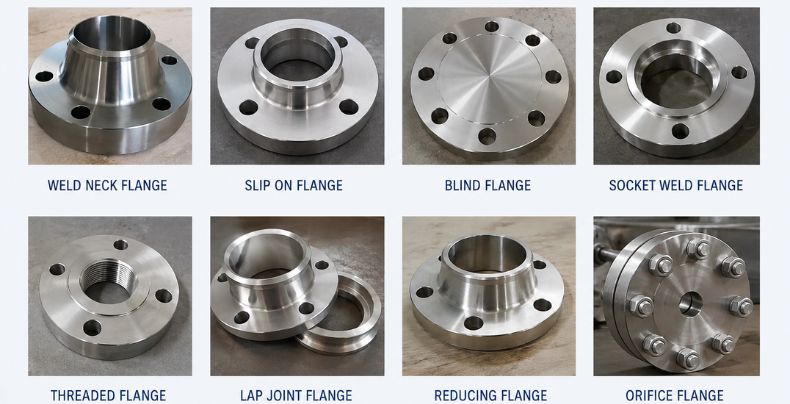
The bolt-flange interface is where crevice corrosion tends to initiate. This location is constantly under stress due to the saltwater and humidity-laden air, especially in marine and offshore environments. The application of anti-corrosion coatings or sealants on exposed surfaces provides significant protection against these effects.
The assembly process involves an anti-seize compound based on nickel to eliminate galling and to provide an effective moisture barrier. Unused bolts should be stored in sealed, dry containers and kept away from reactive metals. Humid or open storage conditions cause surface oxidation well before fasteners ever enter service.
Lubrication and Thread Protection
Proper lubrication does three things: it reduces frictional heat during torquing, prevents galling at mating surfaces, and slows thread wear under cyclic loading. Nickel-based anti-seize lubricants are the standard recommendation for Monel K500 fasteners, given their thermal stability and chemical compatibility.
Lubrication must be reapplied each time bolts are removed for inspection or maintenance. Dry or unevenly lubricated threads generate stress distribution irregularities that shorten service life. In high-temperature or high-vibration environments, that risk compounds sharply.
Handling and Storage Best Practices
Transport Monel K500 Hex Bolts in padded or partitioned containers to prevent surface damage from contact or impact. Direct exposure to carbon steel must be avoided at every stage of handling. Even brief contact deposits iron particles that trigger surface corrosion on the Monel alloy.
Moisture-barrier packaging or single polyethylene bags are also effective for maintaining surface integrity for long-term storage. Store in low-humidity and temperature-controlled areas. Batch labels should include full traceability information to support quality records and accurate inventory management.
Common Maintenance Mistakes
Avoiding common maintenance errors is just as critical as following best practices. These are the most frequent mistakes that shorten the service life of Monel K500 Hex Bolts.
- A small defect that is overlooked during inspection, like surface pitting or minor thread wear, can develop into a structural failure under load.
- The use of solvent-based or chloride-containing cleaning agents removes the protective oxide layer on Monel K500 surfaces and accelerates localised corrosion.
- Reinstallation of bolts with visible deformation, thread stripping or stress cracking introduces a known point of failure into a critical joint.
- Applying incorrect torque values during installation, whether too high or too low, creates stress imbalances that compromise both the bolt and the mated assembly.
- Storing Monel K500 Hex Bolts in damp, uncontrolled environments without protective packaging causes premature surface degradation before the fasteners are even used.
When to Replace Monel K500 Hex Bolts
Knowing when to retire a fastener is just as important as knowing how to maintain one. Here are the key replacement indicators.
- Visible cracking, deep pitting, severe thread deformation, or measurable shank elongation are clear signals that a Monel K500 Hex Bolt requires immediate replacement.
- Continuing to use structurally compromised fasteners in load-bearing or pressure-critical assemblies significantly raises the probability of sudden, potentially catastrophic joint failure.
- In subsea pipelines, chemical reactors, and offshore rigs, timely bolt replacement is a safety-critical decision, not a routine budgetary consideration.
- Replacement intervals are shaped by operating environment severity, cyclic load frequency, thermal exposure, and the consistency of prior installation and maintenance practices.
Choosing Quality Monel K500 Hex Bolts
Material quality at purchase determines everything downstream. Bolts shall meet the requirements of ASTM B865 for bar stock and ASTM B564 for forgings, and mill test certificates shall be available to verify chemical composition and mechanical properties. Full material traceability is a procurement baseline, not a premium request.
Before finalising any order, check that hardness, tensile strength and yield strength are to the specified grade requirements. Suppliers like Metal Yard offer certified Monel K500 Hex Bolts with verifiable documentation, minimising the risk of receiving non-conforming material. Non-conforming fasteners may look similar on the surface to certified fasteners. The only difference you see is under load.
Conclusion
The long service life of the Monel K500 Hex Bolts is not a passive result. Proper installation, periodic inspection, suitable cleaning and proper storage are all directly related to the continued reliable performance of these fasteners in demanding environments. The material’s inherent strength and corrosion resistance are exceptional, but realising their full value depends on how well the fasteners are maintained. Systematic maintenance is the difference between long service life and early replacement.